Rules
Miami Mansion Tours: Storm, Flood and Insurance Rules
Hurricane season dates, FEMA flood zones VE, AE and X, NFIP coverage, elevation certificates, shutter rules and permits: what governs Miami mansion tours.
Miami's best-known waterfront houses are seen from the water, from the street, or through a gate that opens for a scheduled showing, and every one of those routes runs on rules. This guide covers the rules that decide when a bayfront mansion in Miami-Dade County can be opened to visitors: the Atlantic hurricane season dates kept by the National Hurricane Center, the FEMA flood zones drawn on the county's Flood Insurance Rate Maps, the flood and wind insurance questions an owner answers before saying yes, and the permits, shutter requirements, dock lines and gate rules a tour has to clear. It is written for the buyer, agent or owner planning access.
Hurricane season sets the tour calendar
The Atlantic hurricane season runs from June 1 through November 30, and NOAA's National Hurricane Center is the authority that tracks it. The busiest stretch usually falls in late summer and early fall, which is also South Florida's wettest period. The drier, cooler months that follow, roughly November through April, are when waterfront showings, charity events and organized boat tours cluster.
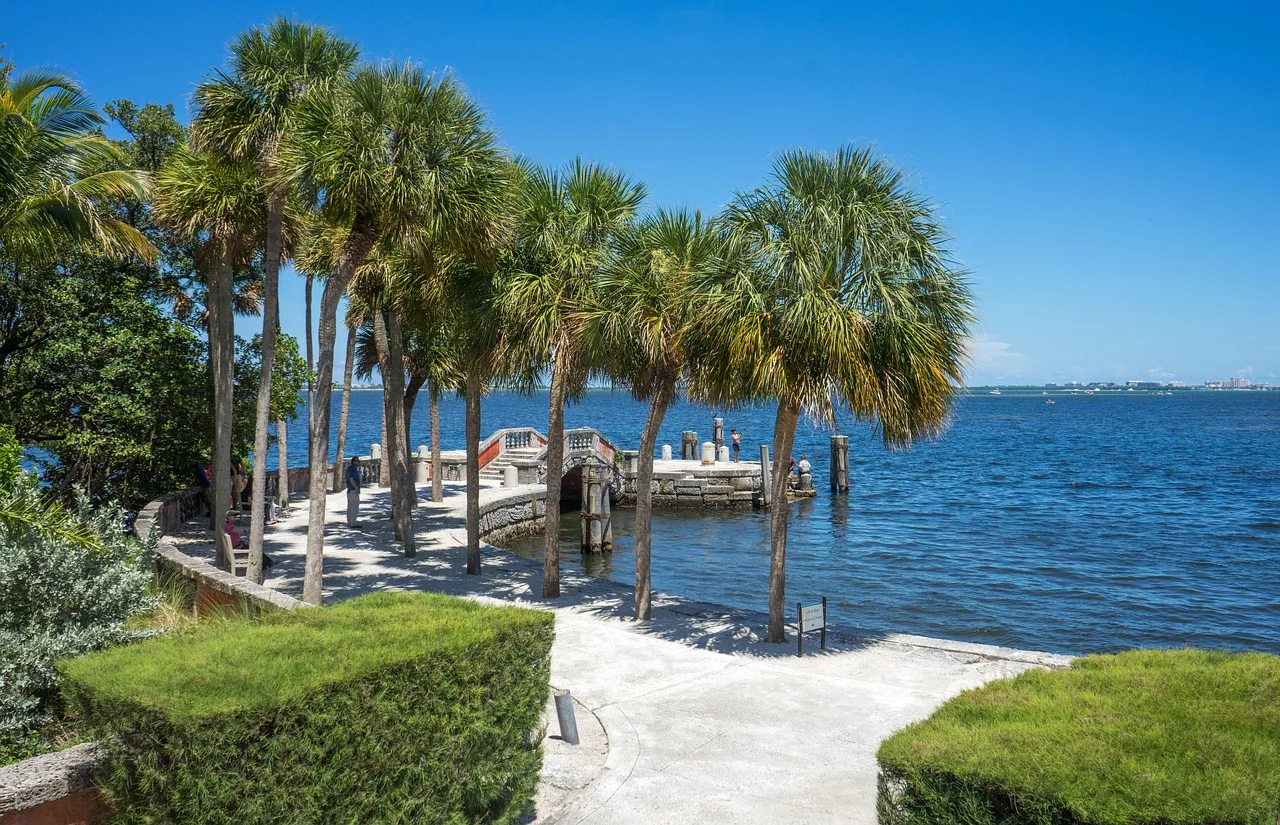
Those boats circle the bayfront addresses that give Miami its celebrity-home reputation: Star Island, Palm Island, Hibiscus Island, Indian Creek and North Bay Road in Miami Beach. They pass on the water; the rules below govern what happens when a group leaves the water or when a crew wants to film.
Miami tour season calendar
- June 1Atlantic hurricane season begins
- June-NovemberStorm risk, tours avoided
- December-MayDry season, tours run
- November 30Hurricane season ends
Preparation, not storm damage, is what usually closes a summer booking. When a house is empty and a system is forecast, someone has to close or install shutters, move terrace furniture and shut down pool equipment before the weather arrives. A broker who promises an August walkthrough is promising a date the owner may have to cancel. Miami is not the only market where the calendar does the scheduling; Aspen's seasonal tour rules turn on snow load, road closures and association windows.
Flood zones: what VE, AE and X mean for a house
FEMA publishes Flood Insurance Rate Maps for Miami-Dade County, and every parcel falls into a zone on the current panel. Zone VE marks coastal high hazard areas where storm waves add to the flooding. Zone AE is the base floodplain, where FEMA has established a base flood elevation. Zone X carries moderate to minimal risk. The base flood elevation is the number a licensed surveyor, engineer or architect records on a FEMA Elevation Certificate.
The zone changes what a visitor can be shown. A VE-zone house often stands on pilings or columns, with an open or breakaway ground level used for parking or storage rather than living space. An AE-zone house may have finished rooms at or near the base flood elevation. Asking for the elevation certificate before scheduling a ground-floor walkthrough saves a wasted appointment.
FEMA flood zone tour effects
VE
- Risk level
- Coastal high hazard
- Tour effect
- Shutters required, dry season only
AE
- Risk level
- Base flood elevation
- Tour effect
- Insurance review before scheduling
X
- Risk level
- Moderate or minimal
- Tour effect
- Fewer restrictions, year round
Flood and wind insurance an owner has to weigh
Standard homeowners policies exclude flood damage. Flood coverage comes from the National Flood Insurance Program, which FEMA administers, or from a private flood insurer, and a lender with a federally backed mortgage requires it on a house in a Special Flood Hazard Area. Rating turns on the zone, the elevation of the lowest floor, the building's type and the enclosure below it, the same facts recorded on the elevation certificate.
Wind coverage is the second half. Florida insurers rate a house on features recorded in a wind mitigation inspection, documented on the uniform form issued by the Florida Office of Insurance Regulation. For a tour the practical link is shutters: a house whose wind coverage depends on opening protection is a house whose windows and doors may have to be covered whenever the owner is away, and a sealed house cannot be shown. If a storm-damaged property does end in a forced sale, the process follows state law, as our guide to celebrity home foreclosure explains.
Shutters, impact glass and the building code
The Florida Building Code treats Miami-Dade and Broward counties as the High Velocity Hurricane Zone, the state's toughest wind region. Along the coast, openings in the windborne debris region must be protected by impact-rated glass or by shutters tested for the design pressure. Products used in the High Velocity Hurricane Zone carry a Miami-Dade County Notice of Acceptance, a label that can be checked on the product or in the permit file.
Florida's Condominium Act and Homeowners' Association Act, Chapters 718 and 720 of the Florida Statutes, limit how far a board can restrict hurricane shutters and impact glass, though an association still approves style, color and placement. On a gated street the same board controls the gate, so shutter schedules and access schedules are usually settled together.
Permits, docks and gate rules
A private visit needs the owner's permission. A commercial film crew or a ticketed gathering usually needs a film permit or a special event permit from the city where the house sits — Miami, Miami Beach, Coral Gables and Key Biscayne each run their own process — or from Miami-Dade County for county property and unincorporated areas.
Waterborne tours stay on the bay and the Intracoastal Waterway. Florida holds the submerged lands beneath navigable water in trust for the public, so a boat may pass, but the upland owner's property runs to the mean high water line, and stepping onto a private dock or seawall without permission is trespass under Florida Statutes § 810.09. On land, the gatehouse adds a second layer of rules — the HOA and gate rules that cover guest lists, arrival windows and parking on private roads.
Planning a tour week that holds up
- Schedule outside the June 1 to November 30 season where the calendar allows, and hold a weather backup date.
- Pull the FEMA flood zone and the elevation certificate for the address before promising a ground-floor walkthrough.
- Ask the owner or listing agent for the current flood and wind policies and for any requirement to keep openings protected while the house is empty.
- Confirm whether the city or the county requires a film or special event permit for the crew or the group size.
- Give the gatehouse the guest list, arrival window and parking plan.
Three things can close a tour with little notice: a forecast system, an insurance requirement that the house be sealed while vacant, and a dock or seawall that is not part of the showing.