Industry
Part of Purchases and sales records: a deed, a roll and a permit compared
How does a home inspection during purchases and sales actually proceed?
Purchases and sales inspections: how a building is read as a system, what a report cannot cover, and how to sort findings by likely consequence.
A building inspection is a systematic look at a structure by an inspector who has seen many fail, and its value is not a defect list.
A competent inspector reads the building as a system. A ceiling stain becomes a question about a roof, flashing, pipe, or vent, and the inspection narrows down which.
This page describes what an inspection covers, what it cannot cover, and how to read a report. It describes no property and concerns no transaction.
What to take away
- An inspection is a visual assessment of accessible parts on one day, and every limitation in that sentence is doing work.
- The most valuable findings are the ones about water, structure and safety; almost everything else is maintenance.
- What the report excludes is as informative as what it includes.
The order an inspector works in
The sequence follows water and load, because those are what destroy buildings.
Inspection order follows water and load
- Sitewhere water goes when it lands
- Roof and envelopebuilding meets weather
- Structurefoundation, framing, movement evidence
- Systemsheating, cooling, ventilation, plumbing, electrical
- Interiorsurfaces read as symptoms
The site. Where does water go when it lands. Grade sloping toward the building, blocked drainage, or a downspout discharging at a foundation explains more interior damage than any other single cause.
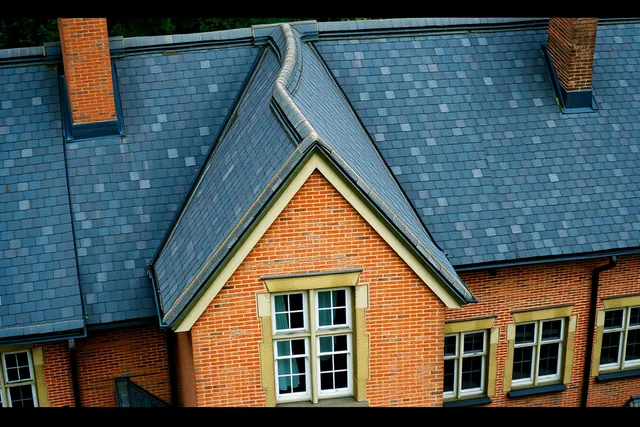
The roof and envelope. Covering condition, flashings, penetrations, gutters, cladding, openings. This is where the building meets the weather and where nearly all water entry begins.
The structure. Foundation, framing where visible, evidence of movement. Cracks are read for pattern and direction rather than for width alone, because the pattern says whether something is settling, rotating or shrinking. Reading those patterns across a whole house is the method set out in mansions architecture, where roof seams date each campaign of work.
The systems. Heating, cooling, ventilation, plumbing, electrical. Inspectors test what can be operated safely and report what they could not.
The interior. Surfaces are read as symptoms. Sloping floors, doors that will not close square, and stains are all indications pointing back at one of the categories above.
What the report cannot tell you
| Limitation | Why it exists |
|---|---|
| Visual and accessible only | Nothing is opened up; what is behind a finished surface is unknown |
| One day, one set of conditions | A leak that appears in driving rain may not appear at all |
| Not a code compliance review | Existing buildings are lawfully nonconforming in many respects |
| Not a valuation | Condition and value are different questions entirely |
| Specialist areas excluded | Structural engineering, environmental testing and geotechnical work are separate disciplines |
The exclusions section of a report deserves as much attention as the findings. An inspector who could not access a roof space, a crawl space or an electrical panel has told you where the unknowns are, and the unknowns are where the expensive surprises live.
What the report cannot tell you
- Visual and accessible only
- One day, one set of conditions
- Not a code compliance review
- Not a valuation
- Specialist areas excluded
Reading findings by consequence
The useful way to sort findings is by what happens if nothing is done.
Sort findings by consequence
Is there active water entry?
stop it first, damage compounds
check if structural movement is progressive
An inspection on an older building needs an extra layer, since a repair routine on a modern house can destroy historic fabric.
The published reasoning on what constitutes appropriate treatment is in the Secretary of the Interior's Standards for Rehabilitation. The specific case of additions is in Preservation Brief 14 on new exterior additions.
What to do with the report
Read it twice, once for the findings and once for the limitations. Then put it beside the documentary record, because an inspection describes the building today and the permit file describes how it got here.
Where the two disagree, chase that disagreement: work that appears in the fabric but not in the file, or a permit with no physical trace.
How to read that documentary record is set out in what a permit file shows, and the physical evidence of past campaigns is in reading interior phases and the anatomy of a large house. Why public records exist at all and what they can support is in how property records work.
Common questions
Is an inspection a guarantee?
No. It is a professional opinion about accessible conditions observed on a date. Reports say this plainly and the sentence is not boilerplate.
Should I be present for it?
If you can. An hour walking a building with someone explaining what they are looking at teaches more than the report does, and it lets you ask about the things that are hard to write down.
How many cracks are too many?
The wrong question. Pattern, location, direction and whether movement is continuing are what matter. A single crack in the wrong place is more serious than many in the right ones.
Does an old building need a different inspector?
Often yes. Someone used to modern construction may read a historic detail as a defect, and may recommend a repair that damages the building. Experience with the construction type is the qualification that matters.