Maintenance
Vacation homes list: signal versus noise
Vacation homes in exposed settings: a list of the roof, wall, opening, ground and deck details that salt, wind, ember and water attack first.
A house in an exposed setting is not an ordinary house with a better view. Salt, wind, ember, snow, ground water and ultraviolet each attack a specific part of a building, and each has a construction answer that has to be designed in. What follows is a list of those parts, in the order the weather reaches them.
Nothing here identifies a property or a location. Every item is a general construction consideration, and the requirements that apply in any particular place are set locally.
What to take away
- Exposure attacks a building at its edges and openings, not across its surfaces.
- The parts that fail first are almost always the cheapest parts: fasteners, flashings, sealants and vents.
- Almost every item on this list is governed by a local code amendment somewhere, so the general principle needs a local check.
The roof and the edge
- Covering attachment. Wind lifts a roof at the edges and corners first. Fastening patterns are heavier there for that reason, and a covering fixed uniformly across the whole roof is a covering fixed wrongly.
- Underlayment. The layer beneath the covering is what keeps water out when the covering is damaged. In wind-driven rain it does most of the real work.
- Eave and rake detail. Open eaves let embers and wind-driven water into a roof space. Enclosing them changes the ventilation strategy, so the two decisions have to be made together.
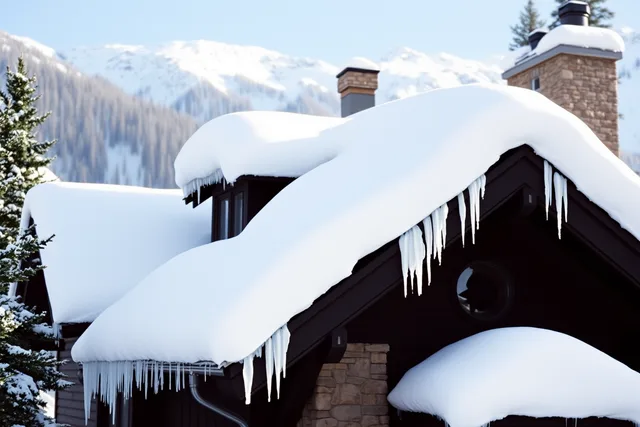
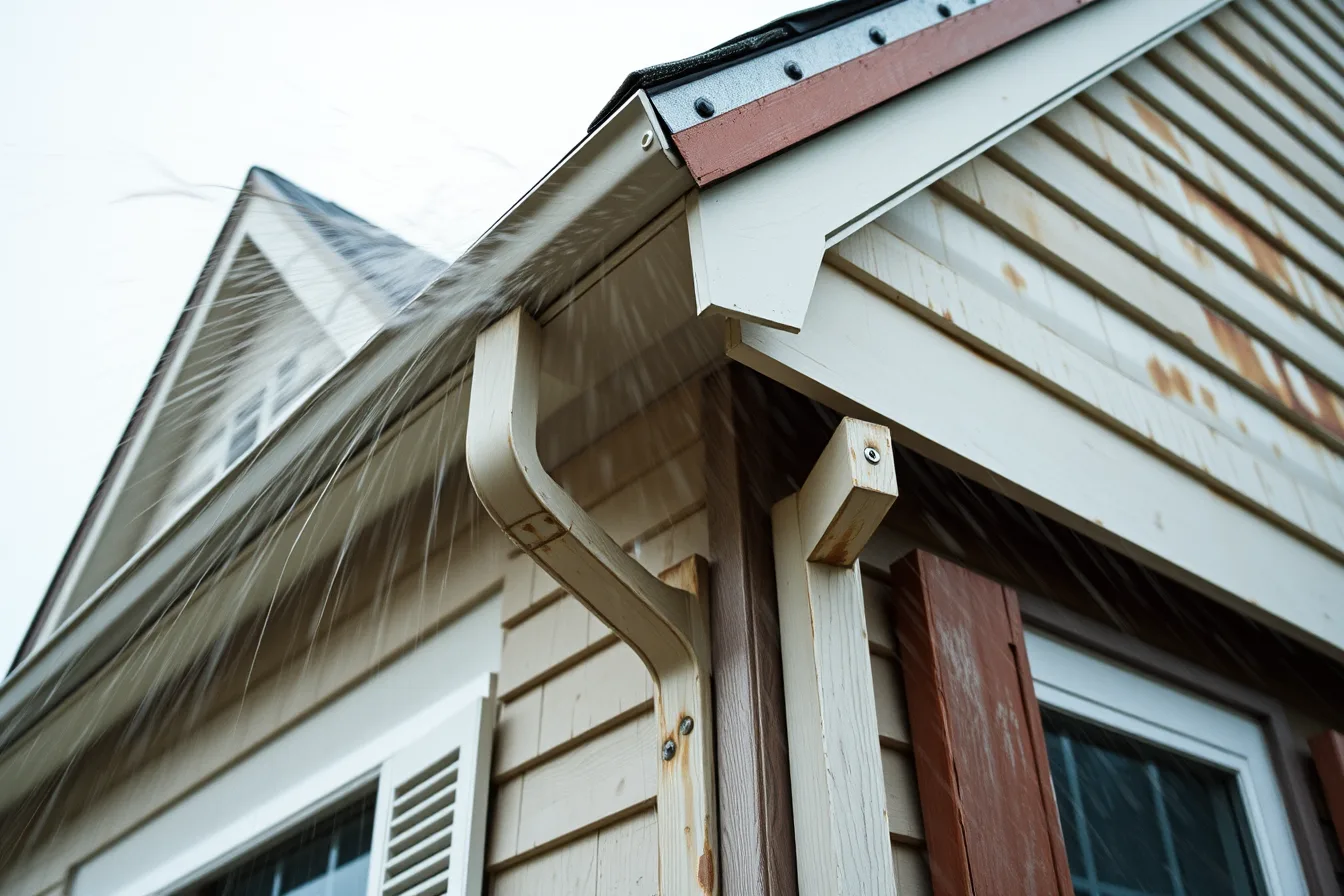
- Gutters and downpipes. In heavy rain they are undersized more often than not, and in ember exposure they collect exactly the fuel you do not want against a roof edge.
- Flashings. Every change of plane is a flashing, and every flashing is a joint with a service life shorter than the roof.
The wall and the openings
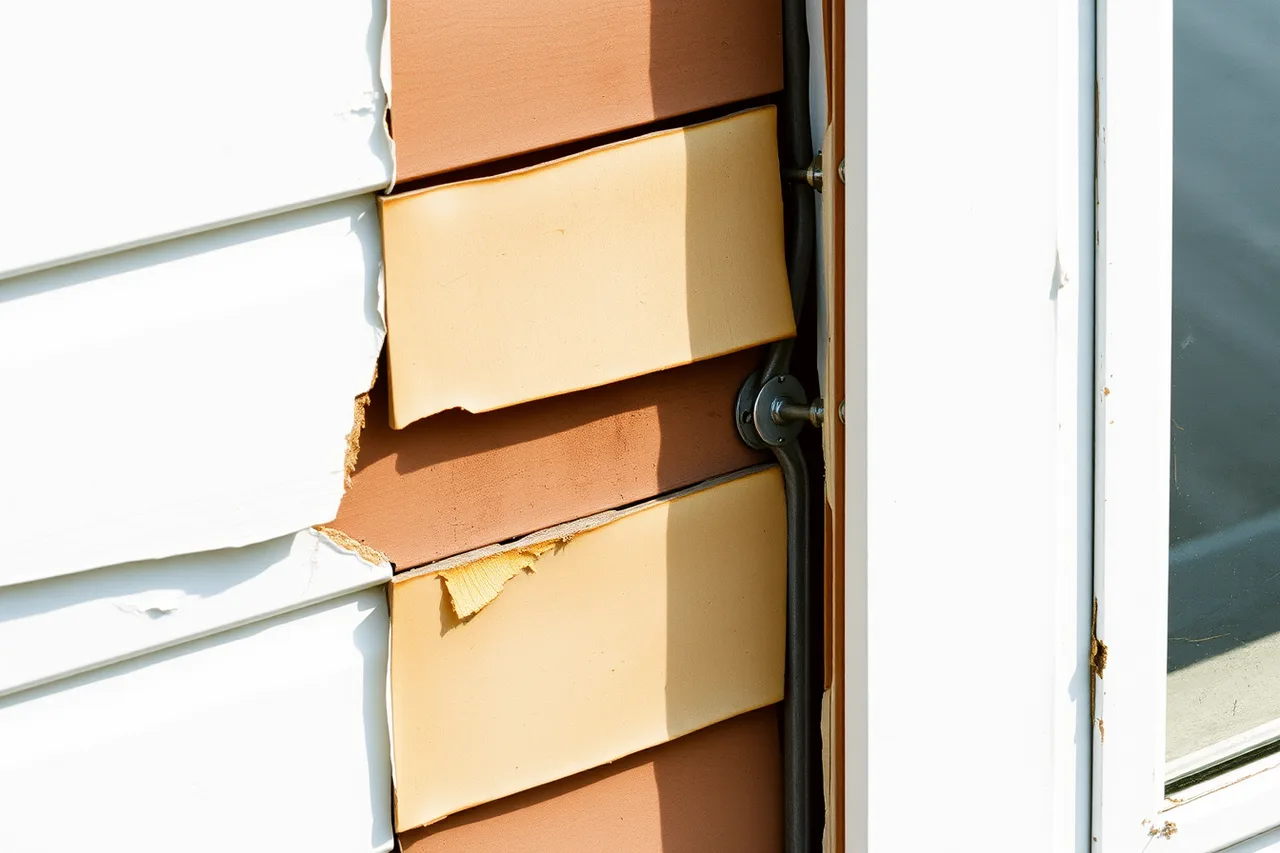
- Cladding material. Salt air, ultraviolet and freeze-thaw each punish different materials. A choice that lasts inland can fail quickly on a coast.
- Fasteners. In salt air, fastener corrosion is the commonest early failure, and it is invisible until the cladding moves.
- Drainage plane. A wall assembly should let water that gets past the cladding drain out. Sealed assemblies that trap water rot from inside.
- Window and door protection. Impact exposure, wind pressure and ember entry all concentrate at openings. Shutters, laminated glass and closable vents are the usual answers.
- Vents and soffits. Every opening into a roof or floor void is a route for embers, wind-driven rain and animals. Screening size matters and is often specified locally.
- Sealants at joints. These have a service life of years, not decades, and they are the item most likely to be missed in maintenance.
The ground and below
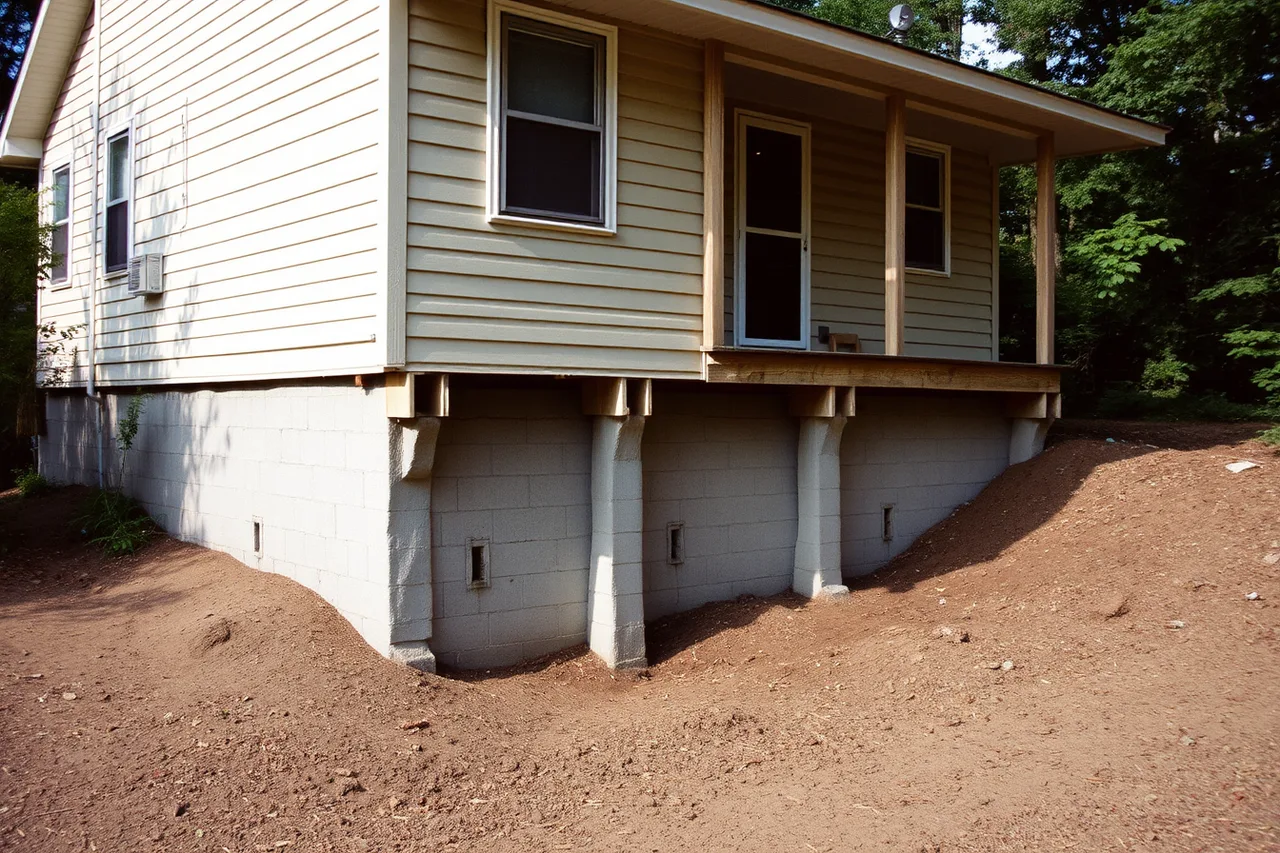
- Height above grade. In flood exposure, the level of the lowest floor is the single most consequential decision, and it is set by mapped hazard rather than by preference.
- Foundation type. Piles, piers, stem walls and slabs behave differently under scour, expansive soil and frost. The choice is a site question, not a cost question.
- Site drainage. Water arriving at a building is a landform problem before it is a building problem. Grade away, and give the water somewhere to go.
- Crawl space ventilation and closure. The strategy has to be one or the other, deliberately, and mixing them produces damp.
- Vegetation clearance. In wildfire exposure the zone immediately around a building matters as much as the building. It is also the part most often undone by later planting.
Decks, stairs and outbuildings
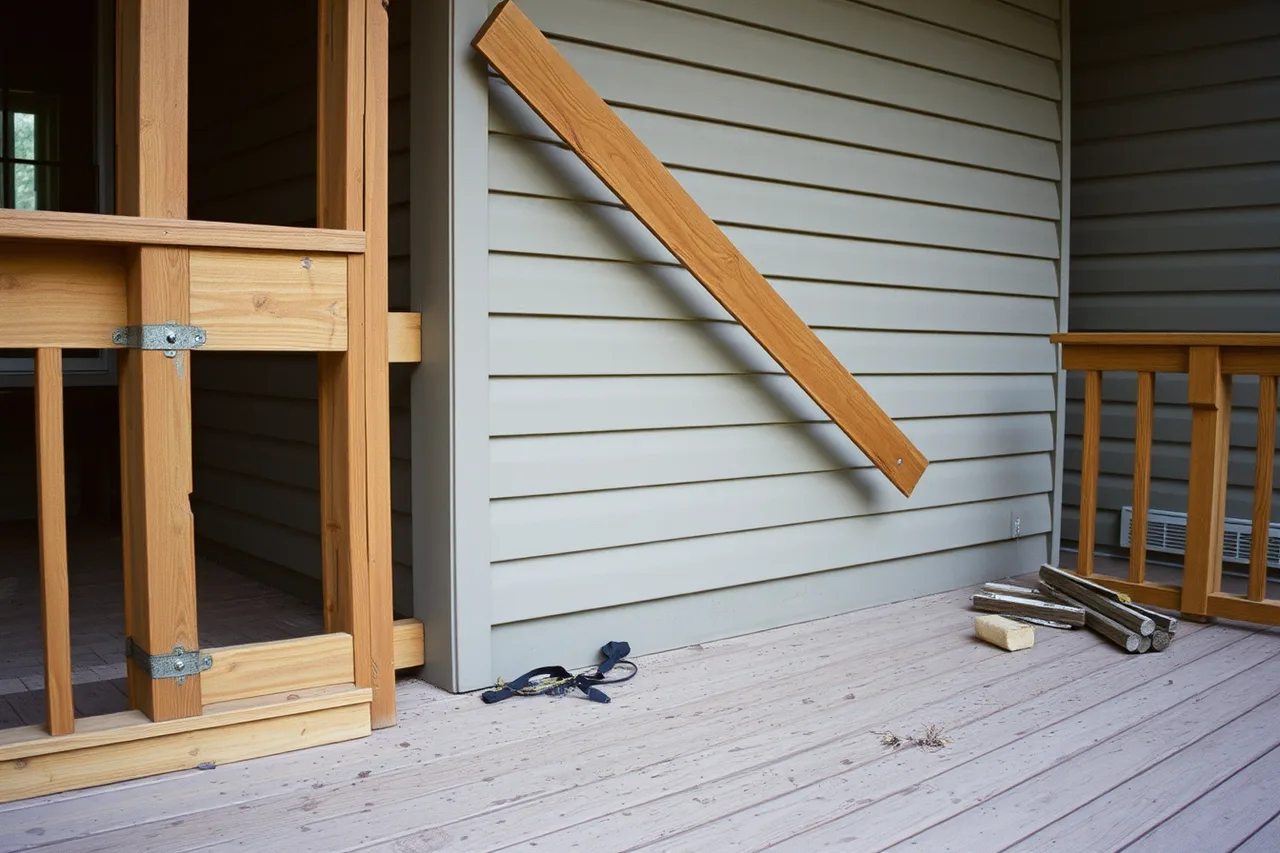
- Deck framing and attachment. A deck pulling away from a house is a common structural failure, and the connection detail is where it happens.
- Deck surface in ember exposure. A horizontal surface that collects debris against a wall is a known weak point.
- Stair and rail corrosion. Exterior metalwork in salt air needs a specified system, not a coat of paint.
- Outbuildings and fences. Combustible structures attached to or close to a house extend the building for fire purposes, whatever the drawings say.
Where the rules come from
Almost every item above is regulated somewhere, and that regulation is local. Most residential rules come from model documents described at the International Code Council's code library.
The jurisdiction sets the version in force and its amendments. The mechanism for that change appears in how a rule becomes a requirement.
The mapped hazard driving many of these requirements must be checked for the specific site. The layers to read are covered in reading hazard maps.
Why a building empty most of the time behaves differently from one that is not is the subject of vacation homes. The general relationship between exposure, structure and interior is in architecture and interiors.
For coastal exposure specifically, the mapping and inundation tools published by the NOAA sea level rise and coastal flooding viewer are the standard public reference for understanding how a shoreline setting may change.
Common questions
Which item fails first in practice?
Fasteners and sealants, almost always. They are cheap, they are hidden, and their service life is much shorter than the elements they hold together.
Is a more expensive material always more durable in exposure?
No. Durability is about the assembly and the detail, not the material alone. A well-detailed ordinary material outlasts a premium one installed without a drainage path.
How often should an exposed building be inspected?
More often than an ordinary one, and always after a severe weather event. Nobody can give a schedule that fits every building, and a local builder who works on that shoreline or that hillside will know the failure pattern.
Does any of this apply to a house that is occupied year round?
All of it. Exposure does not care about occupancy. What changes with intermittent use is how long a small failure runs before anybody notices.