Rules
Canadian Celebrity Home Privacy Laws: What a Buyer Can See
Canadian celebrity home privacy laws limit what buyers see. PIPEDA, provincial statutes and MLS rules decide what you can request and what stays closed.
What to take away
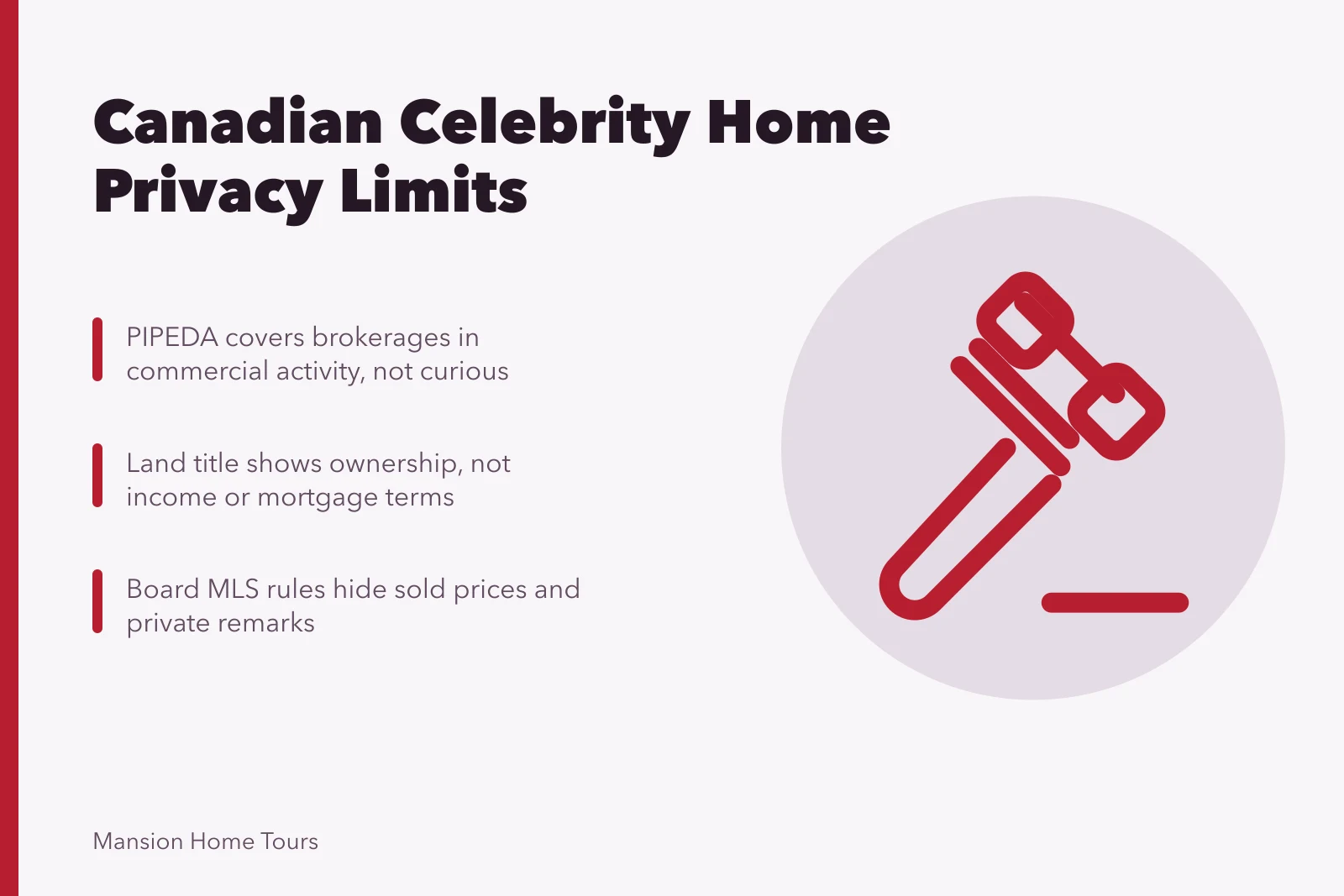
- PIPEDA covers personal information held by businesses in commercial activity, so a listing brokerage cannot hand out a seller's contact history or financial details on request.
- Provincial land title and assessment systems are public in most provinces, but they show ownership and value, not income, mortgage terms or the identity of a trust's beneficiaries.
- Real estate board rules are often stricter than the statutes. Sold prices, private remarks and seller motivation sit behind board login walls, not behind freedom of information requests.
- A buyer who wants more than the public record allows should expect to negotiate for it, in writing, through the seller's agent.
The federal floor under every request
The Personal Information Protection and Electronic Documents Act sets the baseline for private-sector handling of personal information across Canada. It applies to organizations engaged in commercial activity, which includes brokerages, developers and property managers.
Under that law, an individual can ask an organization what personal information it holds about them and how it has been used. That right belongs to the person the information is about, not to a curious neighbour or a competing buyer. A stranger asking for a celebrity's mortgage balance has no standing.
The Act also limits disclosure without consent. A brokerage can share information needed to complete a transaction, but it cannot treat a public profile as blanket consent. Read the federal privacy law summary for the exact scope.
Quebec, British Columbia and Alberta have private-sector statutes the federal privacy commissioner has deemed substantially similar. In practice that means the same answer arrives from a provincial regulator instead.
What the public record actually contains
Land title and assessment systems are the workhorse of Canadian property research. Ontario's land registry gives you parcel ownership and encumbrances for a fee. BC Assessment publishes roll values by address. Municipal property tax records are generally open.
What none of them give you is the seller's reason for selling, the accepted price before closing, or the names behind a numbered company. Ontario's municipal freedom of information statute covers records held by local government, not by a private seller or their agent, which is the line most searchers miss.
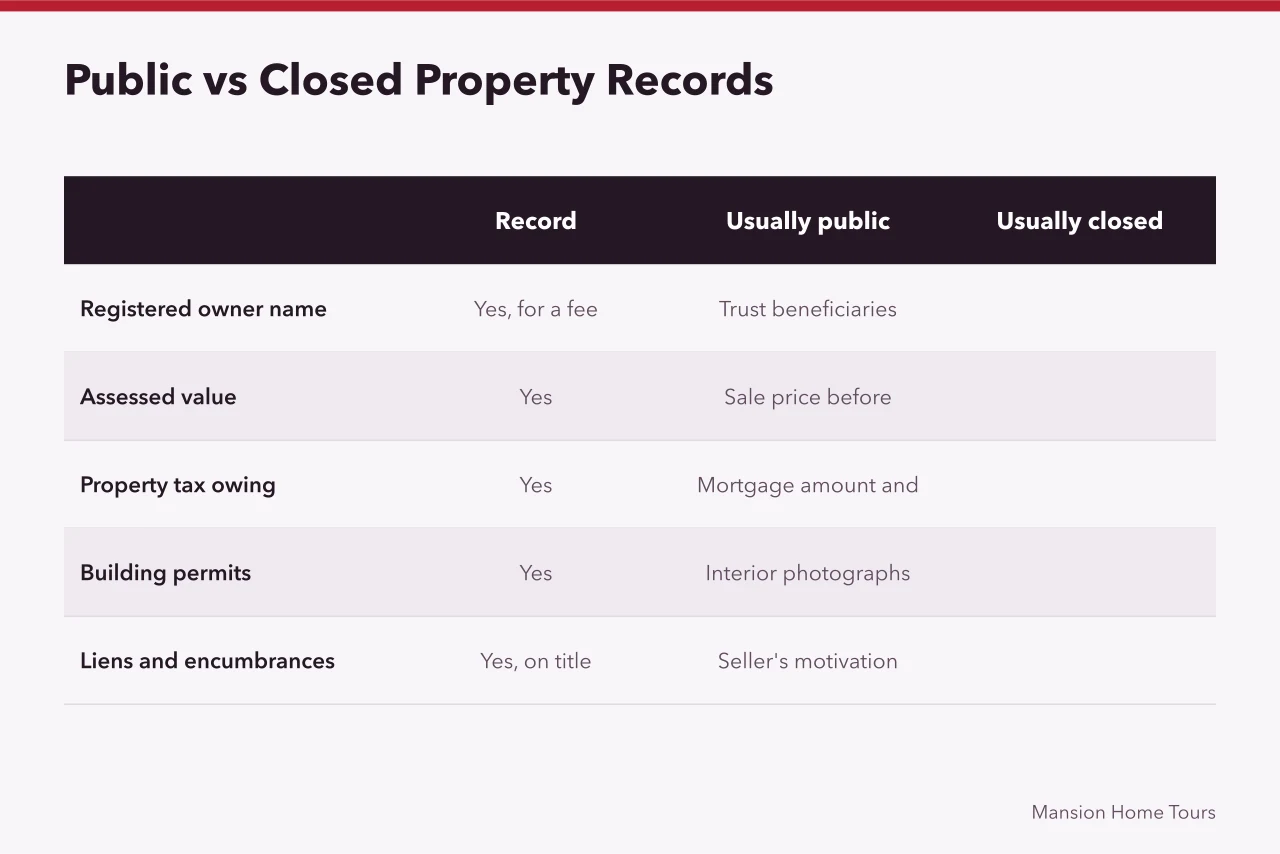
| Record | Usually public | Usually closed |
|---|---|---|
| Registered owner name | Yes, for a fee | Trust beneficiaries |
| Assessed value | Yes | Sale price before closing |
| Property tax owing | Yes | Mortgage amount and lender |
| Building permits | Yes | Interior photographs |
| Liens and encumbrances | Yes, on title | Seller's motivation |
Board rules bite harder than the statutes
Provincial real estate boards and their MLS systems set their own disclosure rules, and those rules are frequently tighter than PIPEDA requires. Sold prices are released on a delay, or only to members, depending on the board.
Private remarks, showing instructions and seller concessions sit behind the member login. A buyer's agent can read them. A member of the public cannot, and a privacy request will not pry them loose because the board is not the data controller for that field.
This is where Canadian practice diverges most from American habit. In many US markets, county recorder offices publish sale prices within weeks. Canadian buyers often wait months for the same figure, or never see it. If you are comparing expectations across borders, agency prices against assessment files explains why the two numbers rarely match.
Example: asking for a sold price in Ontario
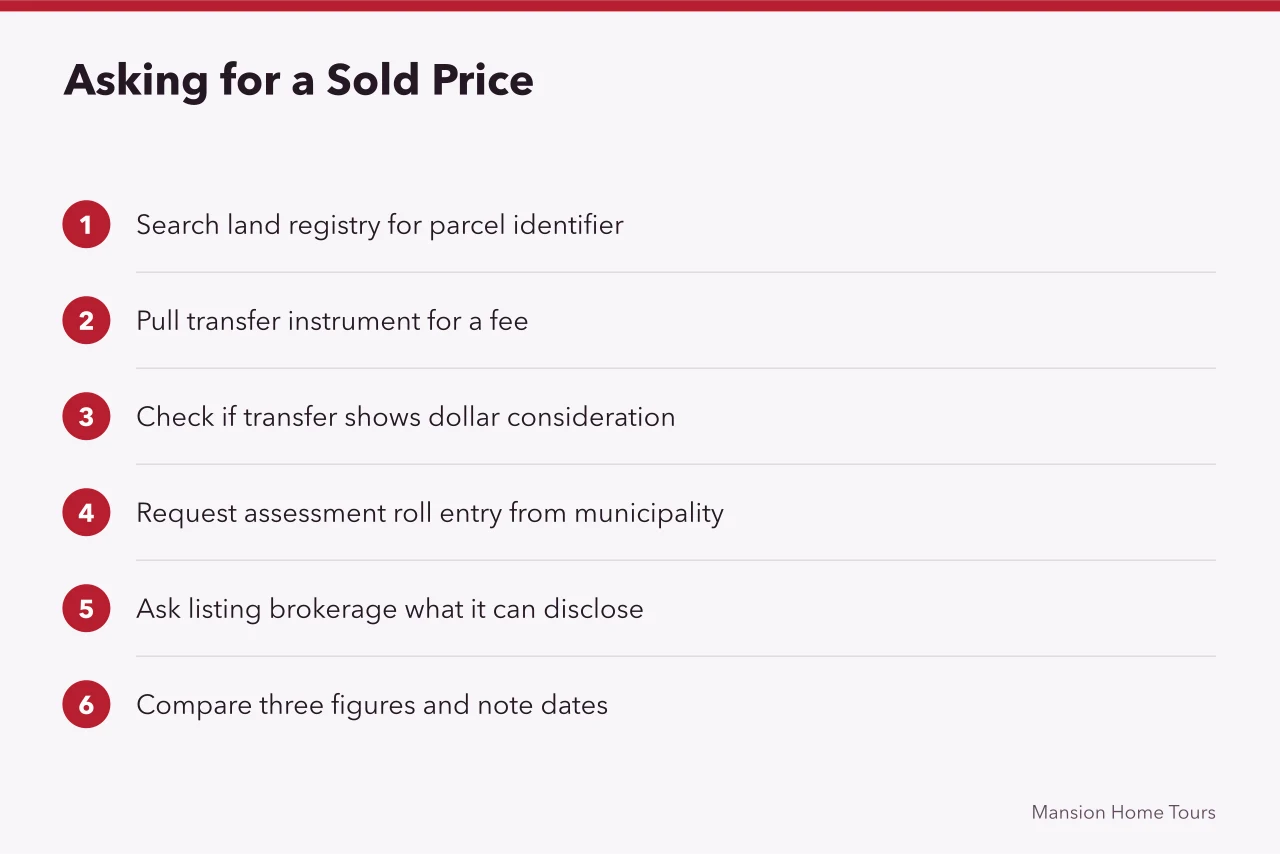
- Search the land registry for the parcel identifier and pull the transfer instrument for a fee.
- Check whether the transfer shows consideration as a dollar figure or as a nominal amount.
- Request the assessment roll entry from the municipality for the current value.
- Ask the listing brokerage in writing what it can disclose under its board rules.
- Compare the three figures and note which one is dated.
The transfer instrument is the strongest public document, but it can show a nominal consideration when the real deal was structured differently. Treat it as evidence, not proof.
Where privacy law stops a buyer cold
A seller's health, finances, family situation and security arrangements are personal information. A brokerage that volunteers them to help a sale is exposed to a complaint, and the penalty is not abstract.
The Privacy Commissioner can investigate, publish findings naming the organization, and take the matter to Federal Court to enforce compliance. A finding against a brokerage damages the licence it depends on, which is why agents refuse even harmless questions.
Security is the other hard stop. Gated communities and private roads add contractual limits on top of statute, and a homeowner association can restrict access to plans and resident lists. The overview of gated community arrangements shows how private governance layers over public law.
A checklist before you request anything
- Confirm which regulator covers the brokerage: federal or a substantially similar provincial statute.
- Decide whether you want the record as a buyer or as a member of the public, because the answer differs.
- Pull the title and assessment entry first; they are cheap and quick.
- Put any request for non-public detail in writing to the seller's agent.
- Keep a dated copy of every response.
If your interest is the building rather than the owner, reading Los Angeles homes architecture with a sceptical eye shows how much you can learn from public drawings and permits alone.
Common questions
Can I get a celebrity's sold price in Canada? Sometimes, and usually later than you would like. The transfer instrument may show a figure, but boards often delay publication of sold data. Check the registry first, then ask the board.
Does PIPEDA let me request someone else's information? No. The access right belongs to the individual the information is about. You can request your own file, not a stranger's, no matter how famous they are.
Are trust-owned properties hidden from buyers? The trustee or numbered company appears on title, not the beneficial owner. You can confirm the parcel and the charge, but not who stands behind it, unless a court order or a public filing says otherwise.
Do the same rules apply in every province? No. Land title, assessment and freedom of information regimes differ by province, and board rules differ by board. Confirm the local rule before you rely on it.