Guides
What happens to a celebrity home after foreclosure in Texas?
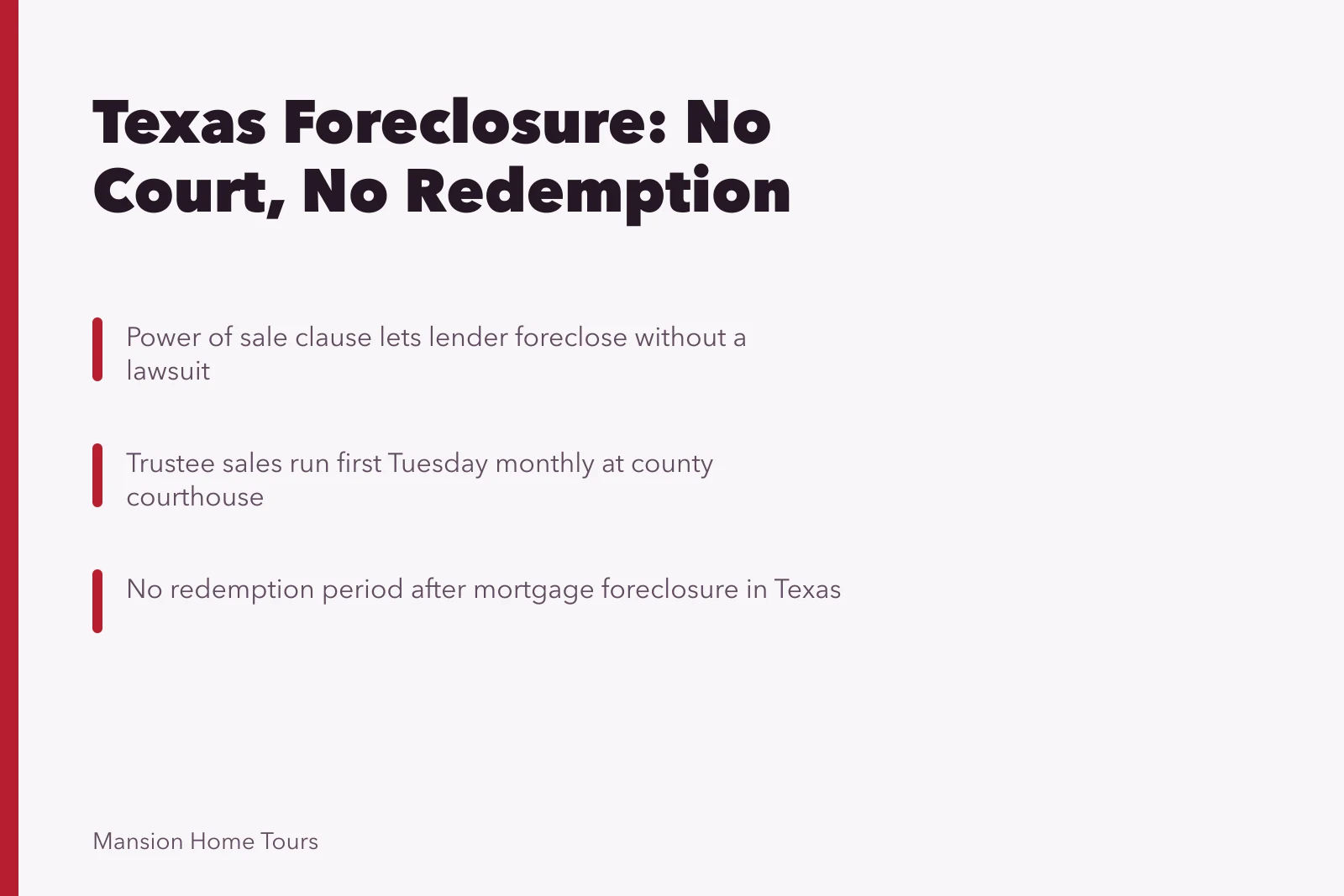
A Texas celebrity mansion can be seized at a courthouse auction in weeks, with no court case and no redemption period after the final sale price.
What to take away
- Texas forecloses without a lawsuit when the deed of trust carries a power of sale, so a mansion home can reach auction in months, not years.
- Trustee sales run on the first Tuesday of each month at the county courthouse, with the notice posted and mailed at least 21 days ahead.
- Texas gives no redemption period after a mortgage foreclosure. The high bidder holds title when the auction closes.
- Bids are cash or certified funds, the house is usually not inspected inside, and the sale carries no financing contingency.
- A bankruptcy filing stops the sale through the automatic stay, but the lender can ask the court to lift it.
- Tax liens and HOA liens can survive the auction and become the new owner's bill.
Texas non judicial foreclosure and how the process starts
Texas lets a lender foreclose without filing suit, provided the deed of trust contains a power of sale clause. Most Texas purchase loans include one.
The trigger is missed payments followed by acceleration, which makes the full balance due at once. The lender then hands the file to a trustee, often a title company or a firm that handles foreclosure work.
The trustee is named in the deed of trust and holds the authority to post notices and run the auction for the lender. No judge reviews the file first.
That is why Texas moves faster than judicial foreclosure states such as New York or Florida. A celebrity's mansion home enters the same pipeline for the same reasons as any other house: missed payments, a sale that fell through, or a loan that matured without a refinance.
Read the deed of trust before the notice appears. It tells you whether this loan can be foreclosed without a court and who the trustee is. The Wex legal encyclopedia defines deed of trust, power of sale and foreclosure.
Federal law sits on top of the state process. Tax liens and bankruptcy both live in the U.S. Code.
For how celebrity properties reach this point, see our guide to celebrity home foreclosure.
Notices that start the clock
Texas Property Code requires a notice of default, which gives the borrower at least 20 days to cure before the sale can be noticed. The notice of sale must be posted at the county courthouse, filed with the county clerk, and mailed to the borrower at least 21 days before the auction.
If the property is the borrower's homestead, the notice also goes by certified mail. Homestead owners get that extra protection, and nothing else.
Paying the past due amount plus fees before the sale cures the default. After the auction, that right is gone.
Trustee sales: notice, timing and the auction itself
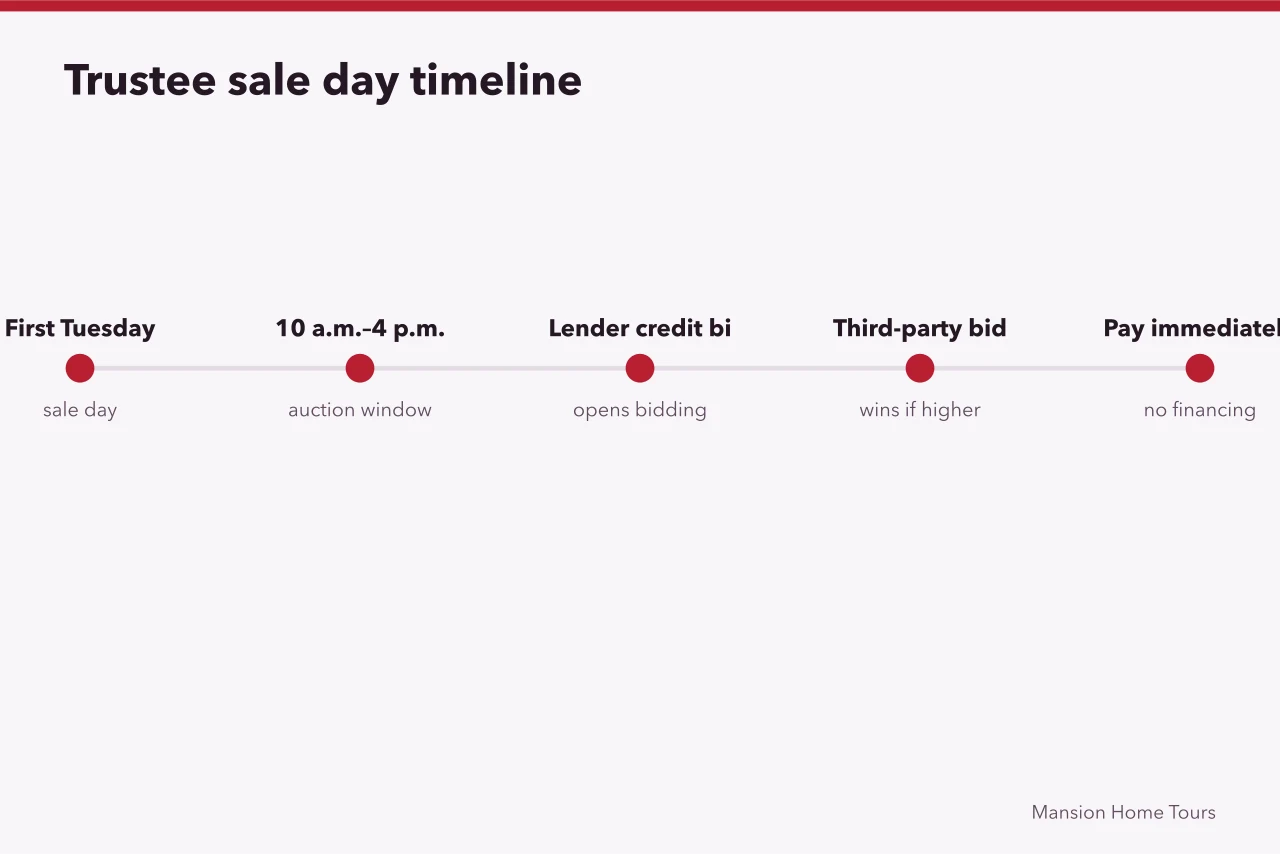
Trustee sales happen on the first Tuesday of each month, between 10 a.m. and 4 p.m., at the courthouse location the county designates. The posted notice names the borrower, the property address, the loan amount, and the sale time and place.
The auction is public. Anyone may watch, but only bidders with funds may participate.
The lender opens with a credit bid, meaning the debt plus costs. If nobody tops it, the lender takes the property back as real estate owned, or REO. If a third party bids higher, that bidder wins and pays immediately.
There is no financing, no inspection period and no due diligence window. A winning bidder who cannot pay loses the property and may owe the difference.
The trustee can postpone a sale, but a postponement past the current month requires new notice.
The auction in practice
A Harris County or Dallas County courthouse auction draws investors, attorneys and neighbors. A celebrity address draws a larger crowd; the bidding rules do not move.
The trustee may require a deposit at the fall of the hammer, with the balance due within hours, often by the end of the day. Bring certified funds above what you intend to bid.
A bankruptcy filing before the sale stops the trustee cold. That is covered below.
Redemption periods and who can use them in Texas
Texas has no general redemption period after a trustee sale. Once the auction closes and the trustee delivers the deed, the buyer or lender holds title.
The exceptions are tax foreclosures and some HOA foreclosures. A tax sale carries a redemption window, and its length depends on the property type, with homestead and agricultural land getting longer than commercial real estate. HOA foreclosures have their own narrow redemption rules.
For a mortgage foreclosure, the borrower's chance to act is before the first Tuesday, not after. That is why cure payments and loan modifications matter in the final weeks.
Property tax liens in Texas can be sold to investors, and the redemption clock follows the tax sale, not the mortgage sale. A mansion home bought at trustee sale may still owe years of taxes.
The money and financial problems section of the legal encyclopedia groups foreclosure with the debt and lien questions that decide who really owns the house.
Cure is not redemption
Cure means paying the arrears before the sale. Redemption means buying the property back afterward. Texas mortgage law grants borrowers cure rights and withholds redemption rights.
That distinction is the buyer's protection. Win a Texas trustee sale and you generally take possession without waiting out a redemption window. Confirm the specific lien type with a Texas real estate attorney before you rely on it.
How buyers bid on seized celebrity property
Bidding takes preparation, not nerve. Know the property, the liens and the auction rules before you raise a hand.
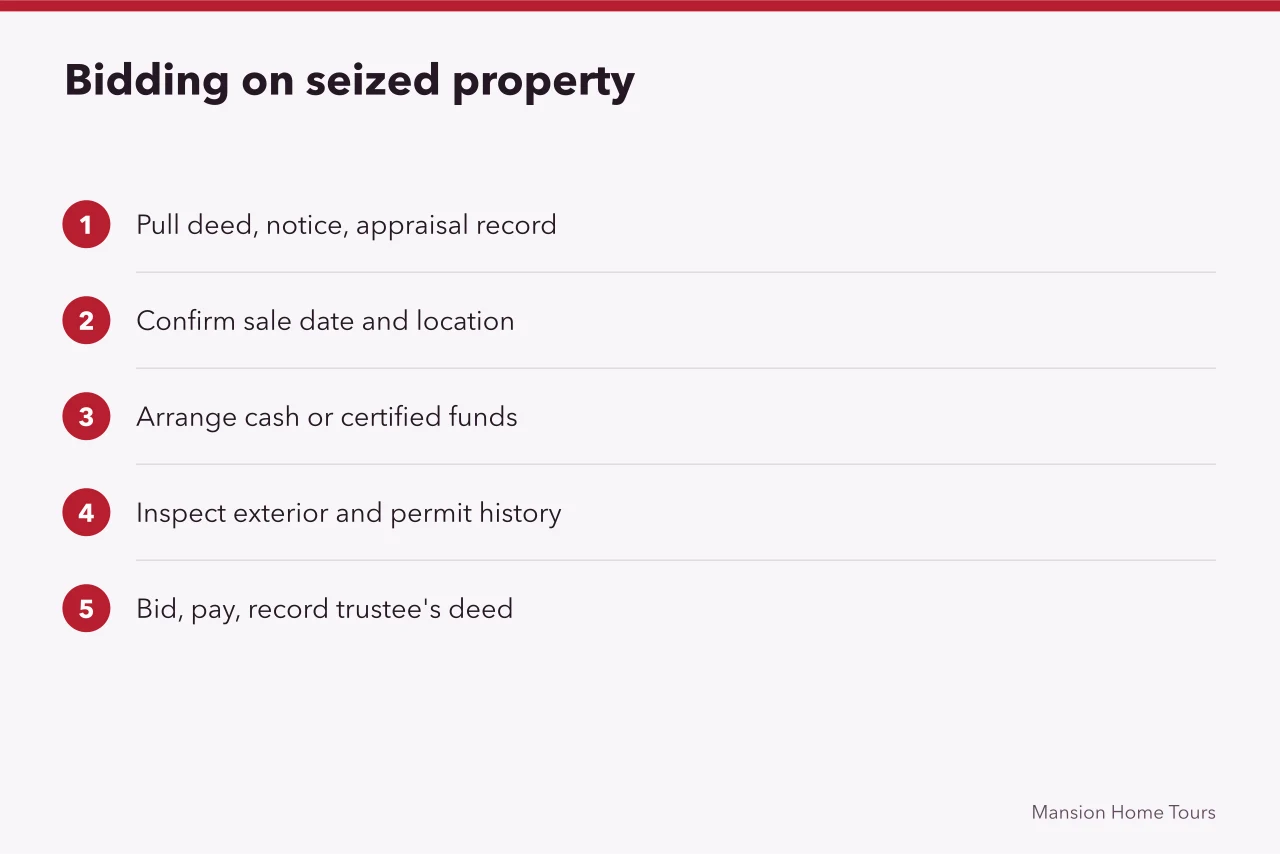
- Pull the deed of trust, the notice of sale and the county appraisal district record. Check for tax liens, HOA liens and judgment liens.
- Confirm the sale date and location with the trustee or the county clerk. Sales get postponed.
- Arrange cash or certified funds, and ask the trustee about deposit and balance rules.
- Inspect from the outside. You normally cannot enter the house, so drive by, photograph the exterior, and read the permit history and prior listings.
- Bid. The trustee opens, the lender credit bids, and you raise if you want it.
- Pay, record the trustee's deed, then handle possession and any occupants.
A worked example: a Hill Country mansion home reaches trustee sale with a credit bid of $4 million. An investor bids $4.2 million, pays a deposit at the auction, and wires the balance the same afternoon. The trustee deeds the property over the next day.
The investor later finds a tax lien that survived the sale and must clear it before a clean resale. Pools, guest houses and acreage tend to carry more than one lien.
Our walkthrough on a celebrity home LLC purchase covers how investors take title through an entity. Compare the auction price against prior deeds and appraisals using purchases and sales records.
Where to find sale notices
County clerk websites post foreclosure notices, some as daily or weekly lists, and trustees keep their own. For luxury property, watch the county appraisal district and the local MLS, because a trustee sale can appear before the MLS reflects it.
Bankruptcy procedure rules that can interrupt a sale
A bankruptcy filing creates an automatic stay the moment the case opens. The stay halts collection activity, including a scheduled trustee sale.
The Federal Rules of Bankruptcy Procedure govern what happens next, including motions to lift the stay. A lender that wants to proceed must ask the court for relief.
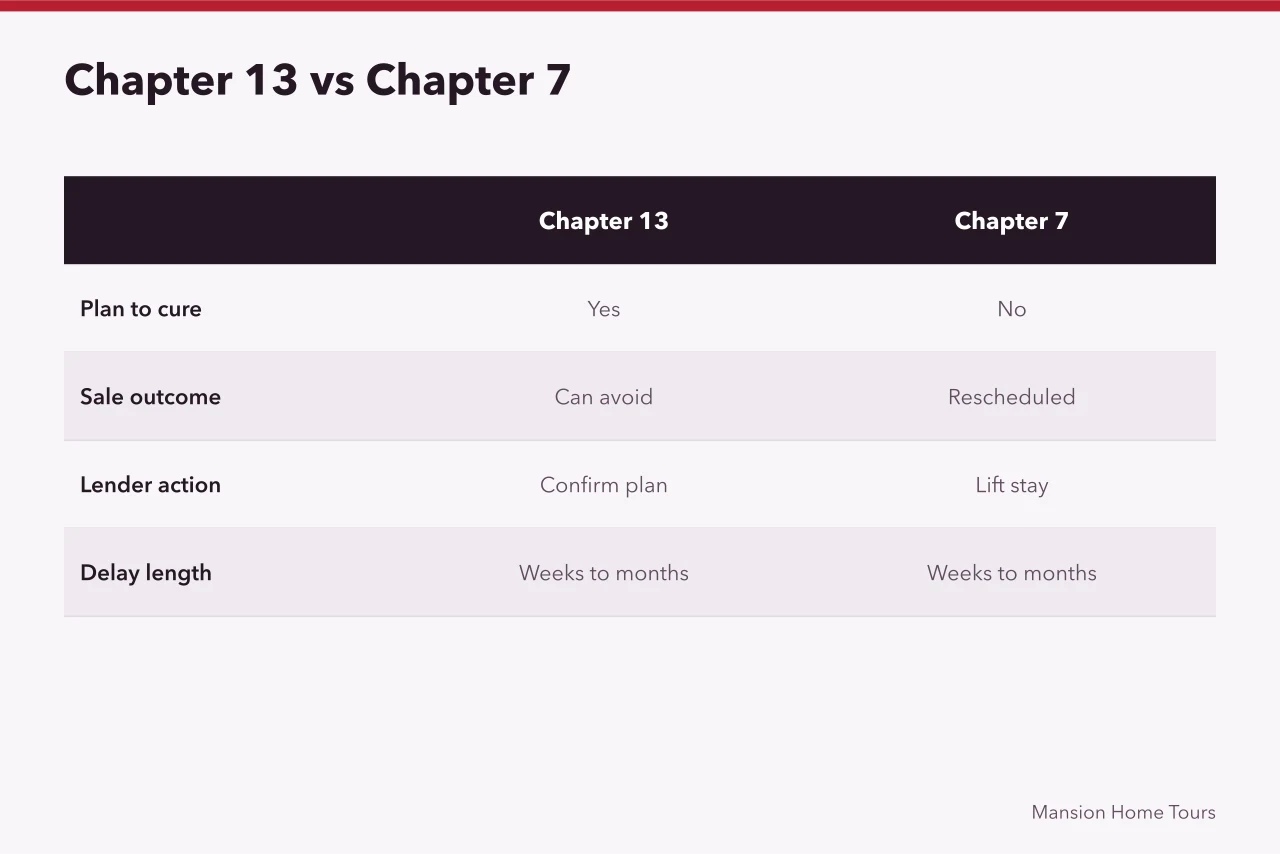
In Chapter 13, the borrower proposes a plan to catch up on mortgage payments over time. Confirm the plan and keep paying, and the sale can be avoided. In Chapter 7, the borrower often lacks the income to cure, so the lender seeks relief and the sale is rescheduled.
Filing does not erase the debt. It delays the auction and forces the lender into court, and that delay can run weeks or months. Repeat filings can draw dismissal or sanctions when a court finds bad faith.
Check the bankruptcy docket before you bid. A filing the morning of the auction can cancel it while bidders stand at the courthouse.
What the stay means for buyers
A stayed sale cannot convey title, and a sale held in violation of the stay may be void. Confirm the case status before you pay anything.
What a foreclosure does to a mansion's tour and resale story
A foreclosure enters the public record. The notice of sale, the trustee's deed and any bankruptcy docket are all documents later buyers, agents and tour writers can pull.
That record reshapes the resale story. A listing agent may market the house as a trustee sale or REO, and buyers will ask why the previous owner lost it.
For tour audiences, the foreclosure adds a chapter. A house once shown as a celebrity retreat becomes a case study in debt, liens and auction risk.
Price depends on condition, location and title. A mansion bought at trustee sale may need repairs, and the new owner may face eviction costs if occupants stay.
Luxury buyers want clean title and a quiet closing. A foreclosure history slows that when tax liens or HOA claims survive. Our review of celebrity home sales history shows how to read a chain of title without assuming the worst.
For market context, see our notes on Canadian celebrity home privacy laws and where distressed inventory sits in the luxury market.
Foreclosure does not end a property's story. It changes the paperwork, the price and the pool of buyers.
An investor who understands non judicial foreclosure, trustee sales, redemption limits, cash bidding and the automatic stay can act on the courthouse steps. Anyone buying at that level should have a Texas attorney review title and a CPA review the tax position before funds move.
Common questions
How long does a Texas non judicial foreclosure take?
From the first missed payment to the trustee sale, the process often runs several months. The notice of sale must be posted and mailed at least 21 days before the auction, and sales are held on the first Tuesday of a month.
Can the borrower get the house back after a trustee sale in Texas?
Generally no. Texas has no general redemption period for mortgage foreclosures. Tax sales and some HOA foreclosures carry their own redemption rules, so confirm the lien type with a Texas attorney.
What happens if the borrower files bankruptcy before the sale?
The automatic stay stops the sale. The lender must ask the bankruptcy court to lift the stay before it can reschedule the auction.
Do I need cash to bid on seized property in Texas?
Yes. Trustee sales require cash or certified funds. The high bidder usually pays a deposit at the auction and the balance within a short window, often the same day.
Can I inspect a mansion home before the trustee sale?
Usually not. The borrower still owns the property and the trustee arranges no showings. Buyers rely on exterior observation and public records, and no one may enter or photograph the home without the owner's permission.